
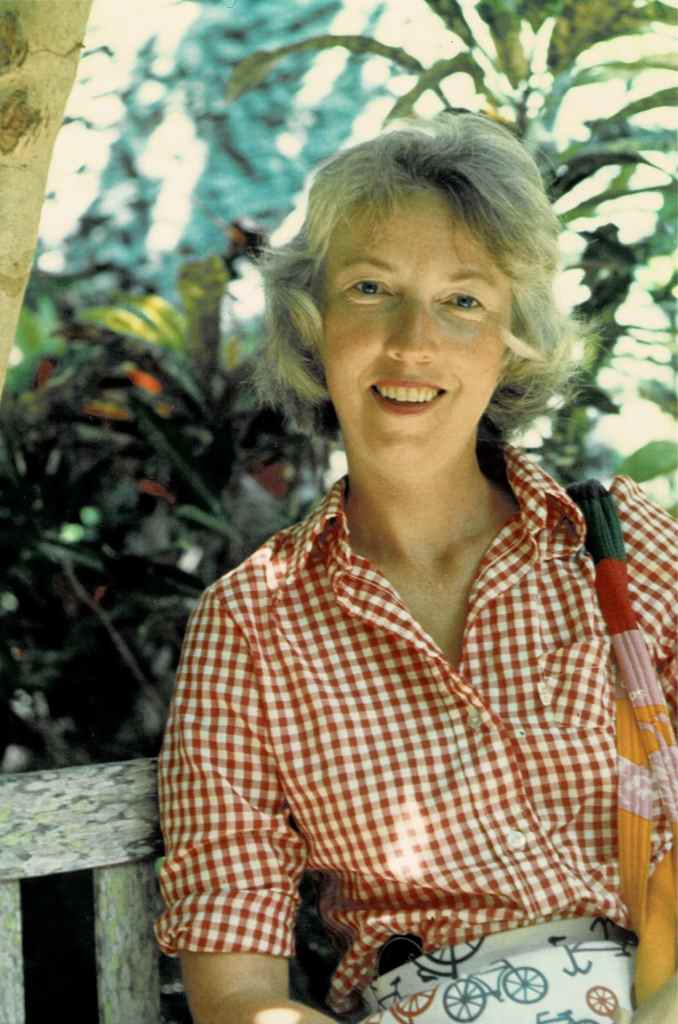
My mother was 34 when she gave birth to me. I was 35 when she died. I want these numbers to match, as if there could be some kind of life-cycle significance and magical meaning to my mourning her death at the same age that she celebrated my life. A cosmic collision of age that would make the connective tissue and that runs through generations even stronger. I have even miscalculated the years and ended up with a match, as if I need more things to tether me to her. All of the physical and emotional strings are so evident, not to mention my house full of stuff that holds her presence. Maybe in grief we never stop searching for ways to hold on to the one we lost, even if just by a number.
Since I’m on the theme of numbers, I count the years and discover that this will be the 18th time that I will celebrate Mother’s Day without a mom to call. 18. One year less than my son’s age. The year we begin to enter a new stage of life recognized, at least by some definitions, as an adult. The year we find ourselves on the precipice of adulthood wondering if perhaps childhood might be a better place to linger. Years ago, I heard the singer/songwriter Rufus Wainwright interviewed about losing his mom. I’m not even a huge fan of his music but there has always been something about him that has intrigued me beyond his melancholy voice. He said something that I didn’t write down but will never forget (granted I may be paraphrasing). He said: “You are born twice. Once on the day you are born and once on the day your mother dies.” For all the thoughtful things that people say after you lose a loved one, in particular your mom, this one observation sent a flash of awakening through my heart and mind. It captured something about my grief that I was never able to define before.
With Rufus’ wisdom in my mind, and with 18 years of life post-Mom, perhaps I am entering a new adulthood. I have lived through wanting her attention back as an infant or toddler would. I have made my way through feeling her loss with such heavy sadness that I felt like a child in a crowded place losing my mother’s hand, turning around only to find a sea of unknown legs and bursting into tears, fearful she is gone forever. I pushed my way through adolescence, fighting against all the ways I am like her and struggling to find all the ways I want to be like me even if I know it might make her uncomfortable. And now I am all grown up. Holding on to things that still make her memory so vivid and perhaps more ready than ever to let other things go.
So now that I am leaving the grief nest empty 18 years later (in truth it never goes empty, but it does get easier to hold), I have decided it’s time to write her a letter, in case she wonders how I am doing. Here I go:
Dear Mom,
This will be the 18th Mother’s Day when I can’t call you. Don’t worry, it makes me more reflective than sad now. But some sadness is mixed in too. I have my own motherhood to celebrate of course. The kids, young adults now, will call or give me a card, and John is good at flowers and chocolate too which is always nice. He knows I love dark chocolate and gets the really good stuff with interesting flavors. (OK, I know this is about Mother’s Day, Mom, but I need a side bar moment here and want you to listen. He is a good guy, Mom. I think based on your behavior leading up to our wedding – which really hurt my feelings for the record – you were worried about the whole opposites attract thing, or maybe you were just worried that I was marrying into a Jewish family that talked too much. Maybe you were worried I wouldn’t speak up. We have had our moments, the really low ones are hard, but he is a good husband. We have worked at it and we stick with it. He listens when I speak up and I’ve learned to speak up more, so don’t worry about that anymore. I do my best to listen to him too. My marriage is doing just fine, better than fine on most days actually. I made it way past the seven-year itch that sent you and Dad into irreconcilable differences. I don’t know if you would be proud, but I am).
Well, that was a load off my chest. Back to Mother’s Day.
If I could call you today, I would tell you that there’s a pandemic. It’s just awful, really horrific for some, and more than 3 million people have died. It’s hard to acknowledge that it’s really grounding in other ways too. We have had our losses to bear in our family, nothing like losing someone, so we are grateful to be among the lucky ones. I think the past year has made me more practical. More like you. It took a pandemic, although I was always pretty practical compared to many I know, to make me even more like you in that way. Also, my hair is gray now, like yours was when you were much younger and more comfortable with your true color. As usual, you were way ahead of the curve, Mom. You could have been the originator of the trending hashtag #grayhairdontcare. It’s probably not worth explaining hashtags to you, not sure how much value they have in the world, maybe some. Using this one here in my blog might make one more woman who’s now embracing gray read what I am writing. I know that sounds silly, and it is. I hear your dismissal.
One thing that I’ve been doing that is not like you is spending time getting rid of old stuff. Based on how long it took us to clean out the house, this isn’t a habit I associate with you. Your practicality did not seem to lead to purging closets, desk drawers, the basement or the attic. Or maybe you did, and I wasn’t paying attention.
When you were dying, did you think about how much stuff you were leaving behind? Lisa and I took the time for sentimental sisterly bonding as we picked through the physical materials of your life and wiped away our tears. We wallowed together in all of the representations of the many sides of you. You made it pretty easy to feel your presence – your journals, poetry books, cookbooks with witty recipe notes, magazine clippings and nature-focused photographs all had stories to tell. And we never fought about all the stuff, not even the valuables. I think we both felt that the family heirlooms loaded with impressive sparkle and emotional complication were less valuable to us than the other pieces of you. And there was such an abundance to divide between us.
Here’s a true story Mom: The day Lisa and I arrived to begin the purge of your house and our childhood home, we immediately heard the sound of spraying water. Indeed, a pipe had bust in the basement and we had no idea how to turn off the source. The fire department came quickly and saved the day. That sump pump did too! An hour or two after the drama, one of us picked up one of your journals. This entry was written fairly recently, thanks to your habit of dating things, and it said: “I had a dream a pipe burst and I couldn’t find the water source.” We looked at each other and froze. That’s how present you were.
Mom? Are you still there? I have a question for you: What if life’s most profound wisdom came from acknowledging and understanding what we want to hold on to, not what we need to let go? What if the things we want to keep with us as we move forward, be them feelings or belongings, are what matter most?1 Don’t worry, I do not still wallow in your passing so much that I get frozen in my tracks. I have learned to let things go about myself too, things that “no longer serve me,” as those wellness and psychology experts like to say.
I have filled up some boxes lately, but I don’t want to tell you about the things I have decided to let go. I want to tell you about the things I keep.
Your grandson, the one who was 18 months old when you departed, wears your three-quarter zip purple Patagonia fleece pullover. This retro style happens to be very popular right now and he was so excited when I found it in the back of a closet. He doesn’t remember you, but he recently told me he feels something about you when he wears it. Isn’t that sweet?
When we were in quarantine, your granddaughter, the one who is about to graduate from drama school, found one of your clippings that for whatever reason was in a folder I keep in the kitchen with recent mail and bills. I don’t remember putting this clipping in my “current stuff” location, but clearly it was something I wanted to keep. She just happened to pick it up and it blew her mind. It was an article from The New Yorker written by Susan Sontag about a new play she wrote, Alice in Bed. This was the only section you underlined:
“For the obligation to be physically attractive and patient and nurturing and docile and sensitive and deferential to fathers (to brothers to husbands) contradicts and must collide with the egocentricity and aggressiveness and indifference to self that a large creative gift requires in order to flourish.”
Susan Sontag, The New Yorker, May 31, 1993
Fast forward one year. In her performance class last week they were reading Sontag’s essay Illness as Metaphor. Suddenly, that cosmic connection between generations came crashing down right there in her drama class. She had to come up with a quick dramatic response based on Sontag’s writing. She wrote a letter to you, about her not understanding what cancer meant then but knowing that’s why you died. About her remembering tiny pieces of you and wondering if you would approve of her less practical choice of career. It made me weep, Mom. A really good weep I hadn’t had in a while. And it inspired me too (yes, she gets credit for the idea of this letter I write now).
Finally, I recently filled two big boxes with old books, some of them yours. I was about to toss in this sweet little atlas. But first I opened it and found your note. I miss your handwriting (good thing it lives on in so many places!). We don’t need atlases anymore, but I put it safely back on the bookshelf. Maybe it will take a few more years to let this one go. Maybe I’ll let the next generation handle it.
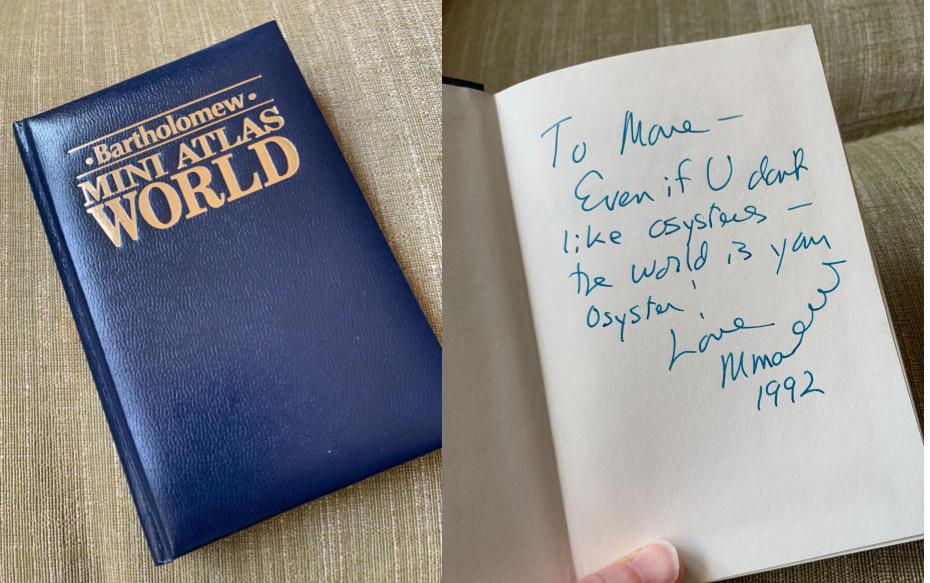
Thank you for this note, Mom. I still don’t like oysters (you misspelled it!). I miss you.
Love, Mare
1 Inspiration credit here goes to writer and speaker Nora McInerny. If you have grieved a loss, and that means pretty much everyone, you might relate to this TED Talk We don’t “move on” from grief we move forward with it. I first heard her story on a podcast, and it really stuck with me.
 Me and My 50s
Loved your post…so beautifully written.
LikeLiked by 1 person
Thank you MJ!
LikeLike
love, love, love. Having lost my mama and found my “birth” mama…all this is very close.
LikeLiked by 1 person
Thank you friend and amazing mama!!
LikeLike